Boeing recently released to press that they had closed more deals with India than whole US in last 50 years. The recent purchase of 10 C-17 Globemaster cost $4.1 billion dollars.
Indian Air Force has been purchasing Chinook, Apache, P-8 Poseidon, 737 and C-17 for its fleet.
With Boeing decision to set up manufacturing facility in India, it is clear that Boeing is cementing its relationships with India.
Indian Air Force fighter aircraft are mainly from Russian aviation giants. With the current scenario, a time may come when Boeing can sell it's fighter aircraft to India.
Indian Air force has specific needs for its combat support. It has long been understood that investments should be made to state of the art support systems because it is the foundation on which national security is ensured.
Boeing being the major supplier for the combat has more to do than just plain selling. Boeing had deployed a team in India years before to understand the needs of Indian Military. Being a sub-continent, India has many threats that had to be handled simultaneously.
A highly integrated system is necessary for this kind of job and Boeing modified it's system accordingly.
After years of studying and computing solution, Boeing is having its fruits now.
Knowing the customers and satisfying them is good business.
Hard to beleive for three reasons - Speed, Altitude and environment.
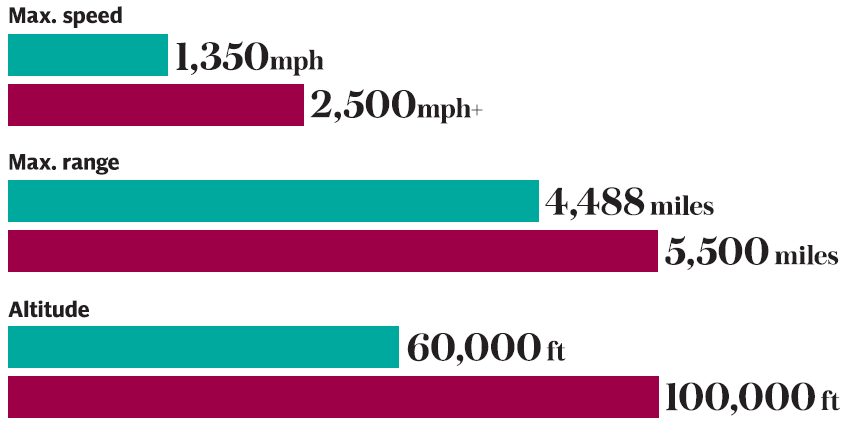
Speed- Mach 4.5. Wow. (Mach 5 -We hit Hypersonic.)
Altitude - 100,000 Feet. (Better than Blackbird?)
Environment - It has a turbojet, rocket motor and ramjet engine- all fuel gobbling engines. (Eh...Global Warming?)
But it's true. Airbus filed a patent for a Aircraft that can fly at Mach 4.5 at 100,000 feet.
What that means is that a transatlantic flight that take 7 hours currently can be completed in 1 hour. London to New York in 1 hour.
It could revolutionize air travel as we know it.
Airbus has different plans for Concorde 2.
If it ever came into existence, it will be mainly used for military purpose. Concorde 2 can take up to 19 passengers or military personnel who needs fast access to another country.
Considering the fact military technology will eventually be used for commercial purpose, a supersonic aircraft flying at 4.5 for 19 passengers is quite possible. But it will take time. Decades at-least.
There are three kinds of engines used in this aircraft. I am sure that Airbus patented a system that uses three different kind of engines to work together.
SR-71A Blackbird of Lockheed Martin uses two kinds of engine to propel it to Mach 3.5. Technically, Blackbird has 4 engines. Concorde 2 will have 6.
Also, since Concorde 2 will be cruising at 100,000 ft - it will break Blackbirds record of absolute record of manned flight. Blackbird's record was 85,069 ft.
If it ever come into existence, I cannot fathom the scrutiny of safety laws Airbus will have to abide. This aircraft will sure be costly, if it comes to reality.
Nevertheless, Concorde 2 will be a legend, if it ever take to sky.
That is the color of black box a.k.a Flight Data Recorder (FDR).
Black box is designed to survive large impact and resist fire. And it comes in orange.
It's orange because it was the only color that made the box pretty.
I'm kidding of-course. Since the purpose of the black box is to record flight data to be analysed after a crash; it has to stand out from the rest of debris.
Why should it stand out from "debris" ?
Have a taste of reality, can you recognize any small equipment from the pic below:
This is just one part of the aircraft. Depending on the crash debris can be in worse conditions. Maybe in a dark jungle. Or deep under ocean.
Every debris will have many shattered pieces jumbled all over up and burned. If the black box was indeed black in color, it would be tenacious job for the investigators to find black box. They would have to go through each and every piece to find the FDR.
And they have to find it fast. In fact, after survivors, finding the black box is the priority. They have to know what caused the crash. If the reason has something to do with aircraft model itself, they can ask airlines all around the world to ground the aircraft until the issue is solved. Only black box may have the answer to what happened to the flight , that could possibly stop similar tragedies in future.
Isn't it bizarre to think that when you are flying, there is a system that records the flight data, so that in the event of a crash, they will know why it happened? Such is the dedication to safety in aviation industry. And still my mom says it's too dangerous to fly.
So the color of black box is orange, Then why is it named "black"? Isn't it easy to call it "orange box"?
Well, it is a a common term used in computing and engineering (especially electronics).
A black box is a device which can be viewed in terms of its inputs and outputs, without any knowledge of its internal workings. It's implementation is "opaque" (black). (Ref:Wikipedia)
What it means is that implementing a black box does not effect any other systems. It's like a photograph that takes the moment and stores it. Doesn't know what it is or why it is. Even if it's taken away, none other systems are effected.
Aviation industry values technical functionality of a system rather than it's aesthetics. It's what's inside that matters not the outside look.
With that thought in mind, I thank you guys for reading.
In 1930s, Lockheed Electra was one successful aircraft. It was twin-engine propeller aircraft that pushed the boundaries of air travelling. Airlines that had this aircraft were able to break new industry horizons with comfort and speed.
When they were modified with more powerful engines, at higher angle of attack - the wing tips enter stall leading the aircraft to enter spin and eventually crash.
Lockheed had to come up with a solution to defend the stall.
Stall can only be defended by airflow. So what they need was extra airflow to create lift and delay boundary layer separation.
The solution was elegant implementation of a natural phenomena called Coanda effect.
The Coanda effect is the tendency of a fluid jet to be attracted to a nearby surface. The principle was named after Romanian aerodynamics pioneer Henri Coanda who was the first to recognize the practical application of the phenomenon in aircraft development. (Ref: Wikipedia)
Here is a video for better understanding of Coanda effect:
Now how can we implement this in aircraft? Of course, fixing a rotating fan on a wing is ridiculous.
They came with solution called slot.
Slots are basically holes in the wings. These holes are shaped like that of a letter box.
The rightly placed holes in the wings cause the high pressure air from below to flow above. This give extra air flow which in turn defend stall.
Leading-edge slats are quite commonly used in many slow speed aircraft. It was first implemented by a company called Handley Page which patented these designs.
Even though it gave extra air flow in high angle of attacks; it caused way lot of drag in higher speeds. This was solved by retractable slots called slats.
All modern aircraft use slats to defend stall at low speeds to make it safe to fly.
When you fly next time, notice the leading edge slats. Hopefully you realize the impact it has on the aircraft and you, the passenger flying in it.
Ever wondered what consists of your air ticket financially? What are the main elements that airlines take into consideration when they price one ticket? Read below and find :
Here you will find the main elements that adds up to your air ticket price:
1. Ground handling charges
This is the cost of check-in staff, the luggage handlers and the people who refuel the plane. These staff usually work for an outside agency. These agencies are authorized by IATA. The airlines pay them for taking care of their passengers. Next time when you Check-In, ask him if he works for the airline or not. Chances are they don't.
2. Airport charges
Airport charge passengers for using their facility. It's mandatory to include these airport charges into passenger tickets. Then they are paid per passenger.
3. Fuel
Fuel prices can move sharply - for example, the oil price rose steadily in the build-up to the war in Iraq. There is also a currency risk: airline fuel is bought in dollars, whereas most of passengers are paying in other currencies. Fuel prices affect the ticket price majorly.
4. Navigation
Part of this goes to the air-traffic control tower at the airport at each end. The rest goes to the national air-traffic control organisation for the countries that the plane flies over. It is very expensive to setup and run these systems. You pay a small portion to airlines for safely navigating.
5. Cost of the aircraft
A medium range aircraft like Boeing 737 cost $70 million, while jumbo jets like A380 cost $300 million. You pay (the cost of the aircraft) divided by [(number of flights per day) multiplied by (number of operating days)].
6. Crew salaries and training
The salaries of the pilots and crew vary from airlines to airlines. On avaerage, the captain earns about $120k a year; the first officer $75-80k; the senior crew member about $25k; and junior crew about $21k each . Airlines can only pay them if they include these charges in your ticket.
6. Administration
The main items are the lease on the head office, IT costs and the salaries of the management and operational staff. There is also a small element to cover refunds etc. This is the key area where low-cost carriers aim to beat national carriers and its peers by extending the low cost mentality to the head office.
7. Maintenance and servicing
Safety is a pivotal element of aviation. To be safe, routine maintenance are to be carried out. This cost money,including the cost of owning spare engines and parts. If you have seen, enough Air Crash Investigation, then you know that careless maintenance will burn entire airline to ground.
8. Advertising
Advertising channels for airlines are usually expensive - mostly newspapers, billboards, bus shelters and the tube. Customer acquisition is fundamental. Who is to pay for all these? Don't worry airlines will add it your ticket price.
9. Tax
And then there is Tax, for the government organization to run properly.
There are other cost like travel agents, credit card charges, bank charges etc.
So, there it is. Breakdown of your flight ticket.(Ref:TheGuardian.com)
Situational awareness at a single point of focus - that is the purpose of an heads up display (HUD). It's a cool tech.
Situational awareness is one hell of a trick. It is knowing, everything, now. It's a power actually - just like in the movie "Limitless":
We make decisions based on information. We process information and decide our next move. If any information is missing; it will affect our decision. That is the reason why quality of your decision increases as we grow. Of course, there are some who get tangled in emotional cobwebs and refuse to see the truth.
As you know, these HUD's are used in fighter aircraft. Since military situations develop on split-second decisions; integrating lot of essential information to a single focus can be the factor of life and death.
The heads up display used in F-35 is the most advanced type made by Rockwell Collins. They are heads up display mounted in helmet. Check out the video below:
This technology, is being transferred down to cars and motorbikes. Check out this good video from cnet:
As told in the video, by 2020 you will know someone who owns an heads up display - or if you are an early adapter you can own one.